
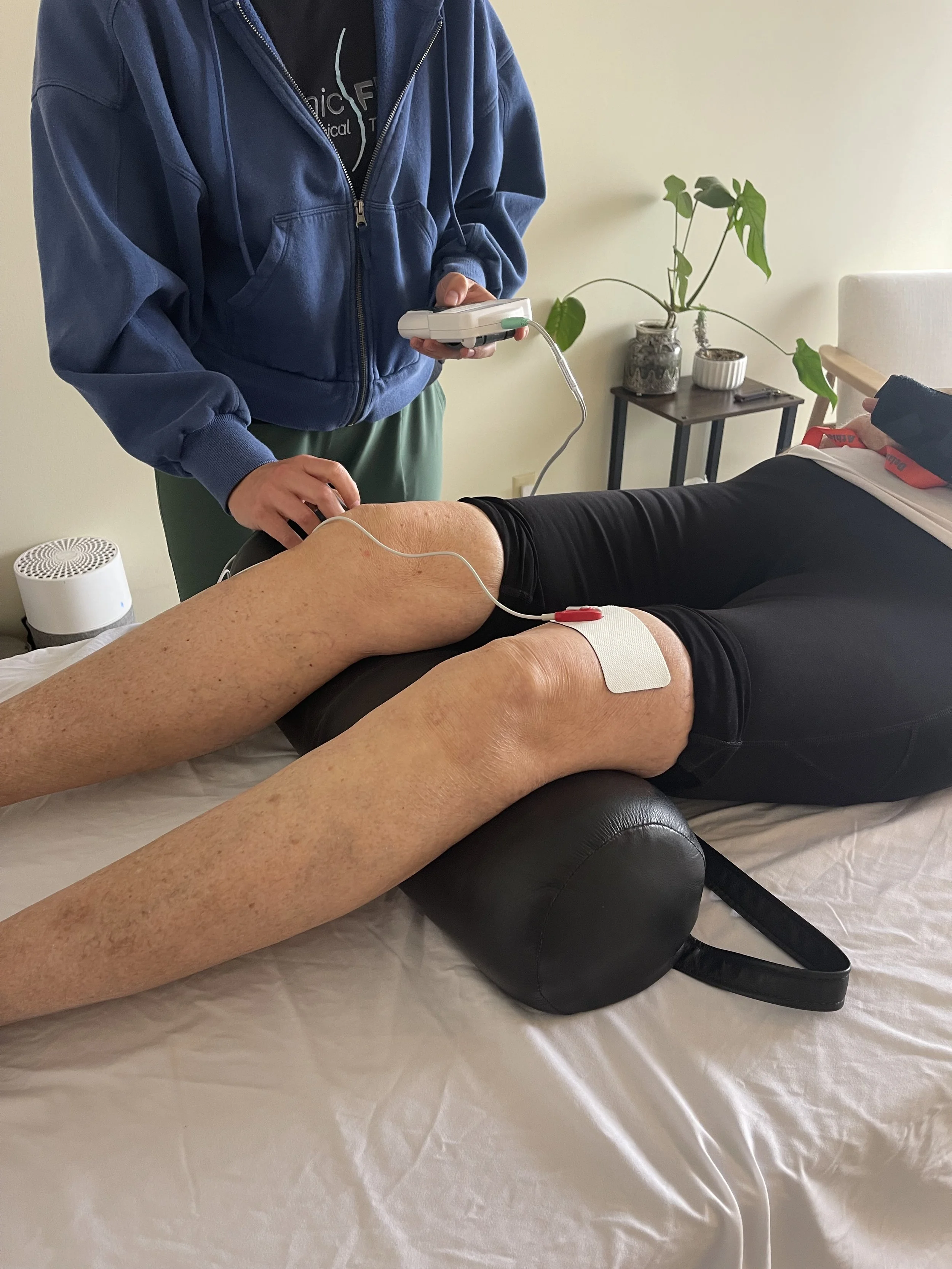
Stim Pod Therapy: What It Is, Who It Helps, and Why It Works
We’re excited to offer Stim Pod Therapy
The Stim Pod May Help:
People with pelvic floor dysfunction- muscles that are too tight, too weak, or poorly coordinated
Postpartum women- reactivating muscles disrupted by childbirth
Those with bladder control issues- urinary urgency and stress incontinence (leaking with movement or pressure)
Individuals recovering from pelvic or abdominal surgery- rebuilding nerve and muscle communication post-operative and improving post-surgical nerve disruption
Chronic back and pelvic pain- modulating pain signals and supporting nervous system response
Peripheral neuropathy- Nerve pain can be some of the most frustrating pain to live with, burning, tingling, numbness, or that "pins and needles" sensation that just won't quit. Whether it's caused by injury, compression, diabetes, or an underlying condition, neuropathy often means the nervous system isn't transmitting signals the way it should.
Sciatica and pudendal neuralgia
Nerve compression-related pain in the hips, low back, or pelvis
Numbness or reduced sensation affecting muscle activation and coordination
Pain itself can rewire how your nervous system processes sensation and movement. The Stim Pod may help modulate pain signals and support more normal nervous system responses, making it easier to move, exercise, and heal.
Because the pelvic floor, core, and diaphragm function as one integrated pressure system, pelvic floor dysfunction often shows up as hip pain, low back instability, or core weakness. Addressing the neuromuscular function of the pelvic or back region can have a meaningful impact on orthopedic recovery too.
If any of this sounds familiar and you're curious whether the Stim Pod or any of our services may help, we'd love to talk.
How Is It Used at Dynamic Flow?
At Dynamic Flow Physical Therapy, we believe technology should support, not replace the human connection and hands-on care that makes healing possible.
The Stim Pod can be an amazing tool when integrated into a whole-body treatment approach that includes:
A thorough evaluation of your movement patterns, muscle function, and symptoms
Hands-on manual therapy to address fascial and muscular restrictions
Neuromuscular re-education using the Stim Pod where appropriate
Movement and stability training to reinforce what the nervous system is relearning
Our goal is always to get to the root cause of what's happening and not just manage the symptoms on the surface.
You Don't Have to Keep Guessing
Too many people spend months, even years managing symptoms without ever getting real answers. They try the Kegels, they do the stretches, they rest when they're told to rest. And still, things don't quite feel right.
Pelvic health and back pain care has come a long way. You deserve access to thoughtful, modern, individualized treatment that looks at the whole you, not just the symptom in front of you.
Is the Stim Pod Safe and Clinically Recognized?
Yes. The Stim Pod is FDA-cleared as a neuromuscular electrical stimulation (NMES) device, meaning it has completed the regulatory review process required by the U.S. Food and Drug Administration for medical devices used in clinical care. FDA clearance is not the same as a guarantee of specific outcomes. Individual results vary based on the nature of each patient's condition, their overall health, and how the device is integrated into their personalized treatment plan.
At Dynamic Flow Physical Therapy, we believe in full transparency. We will always explain what tools we use, why we use them, and how they fit into your individualized care, so you can make confident, informed decisions about your healing journey.
How is STIM Pod different from other electrical stimulation?
STIMPOD NMS460 is an advanced, non-invasive pulsed radiofrequency (PRF) neuromodulation system designed to provide targeted stimulation to peripheral nerves. It may be used to support the management of chronic, neuropathic, and persistent pain, including pain associated with injury or rehabilitation.
Unlike traditional electrical stimulation such as TENS, which is commonly used for general pain modulation, or NMES/Russian stimulation, which are primarily used to produce muscle contractions and facilitate muscle activation, STIMPOD is designed to target nerves and influence nerve signaling.
What makes STIMPOD different?
Pulsed Radiofrequency (PRF) technology
Targeted peripheral nerve stimulation
Designed specifically for neuromodulation and pain management
Non-invasive and drug-free
Can be incorporated alongside other physical therapy treatments
STIMPOD is not necessarily a replacement for TENS, IFC, NMES, or other forms of electrical stimulation. Each technology has different applications, and your therapist will determine which approach is most appropriate for your symptoms and treatment goals.
What does STIMPOD feel like?
You may feel a gentle tingling, pulsing, or tapping sensation during treatment. Treatment is designed to be comfortable, and your therapist will adjust the settings based on your individual response.
Take the First Step
Whether you're dealing with chronic pelvic or back pain, nerve pain, or just tired of not feeling like yourself- we're here to help you figure out what's going on and what to do about it.
Reach out to set up a discovery call. No pressure. No commitment. Just a conversation to help you understand your options and what's going on in your body.
This information is intended for educational purposes only and does not constitute medical advice. Please consult with a qualified healthcare provider to determine the most appropriate treatment plan for your individual needs.
-
STIM Pod uses gentle electrical stimulation to help activate muscles, calm pain signals, and improve communication between your brain and muscles. Small electrodes are placed on the skin, and controlled electrical impulses create a comfortable tingling sensation or muscle contraction, depending on the treatment goal.
Your therapist customizes the settings and placement based on your individual needs. It can be used as part of a treatment plan to support muscle activation, pain relief, and improved movement and function.
-
People with pelvic floor dysfunction- muscles that are too tight, too weak, or poorly coordinated
Postpartum women- reactivating muscles disrupted by childbirth
Those with bladder control issues- urinary urgency and stress incontinence (leaking with movement or pressure)
Individuals recovering from pelvic or abdominal surgery- rebuilding nerve and muscle communication post-operative and improving post-surgical nerve disruption
Chronic back and pelvic pain- modulating pain signals and supporting nervous system response
Peripheral neuropathy- Nerve pain can be some of the most frustrating pain to live with, burning, tingling, numbness, or that "pins and needles" sensation that just won't quit. Whether it's caused by injury, compression, diabetes, or an underlying condition, neuropathy often means the nervous system isn't transmitting signals the way it should.
Sciatica and pudendal neuralgia
Nerve compression-related pain in the hips, low back, or pelvis
Numbness or reduced sensation affecting muscle activation and coordination
-
A typical session lasts about 10 minutes for one area of pain or vagal nerve stimulation. A typical session lasts about 30 minutes for multiple areas of pain, more complex pelvic symptoms, peripheral neuropathy, or leakage protocols.
-
The number of sessions varies based on the condition being treated and individual patient needs. On average 4-6 visits, but may need more for chronic conditions and occasional “maintenance” visit.
-
STIM Pod is one tool we may use to complement hands-on therapy, therapeutic exercise, and movement retraining. Unlike traditional exercises, which require you to actively contract a muscle, electrical stimulation can help activate specific muscles through gentle electrical impulses.
It’s not a replacement for active rehabilitation—it works best when combined with targeted exercises and other treatments. Your therapist will determine whether STIM Pod is appropriate for your goals and how it can best fit into your personalized treatment plan.
-
Stim Pod Therapy is often a self-pay treatment.
STIM Pod 10-Minute Session: $75 per session
6-Session Package: $414 (save $36)- $69/visitSTIM Pod 30-Minute Session: $135 per session
6-Session Package: $750 (save $60)- $125/visit
Add red light therapy to your STIM POD session at no additional cost.